
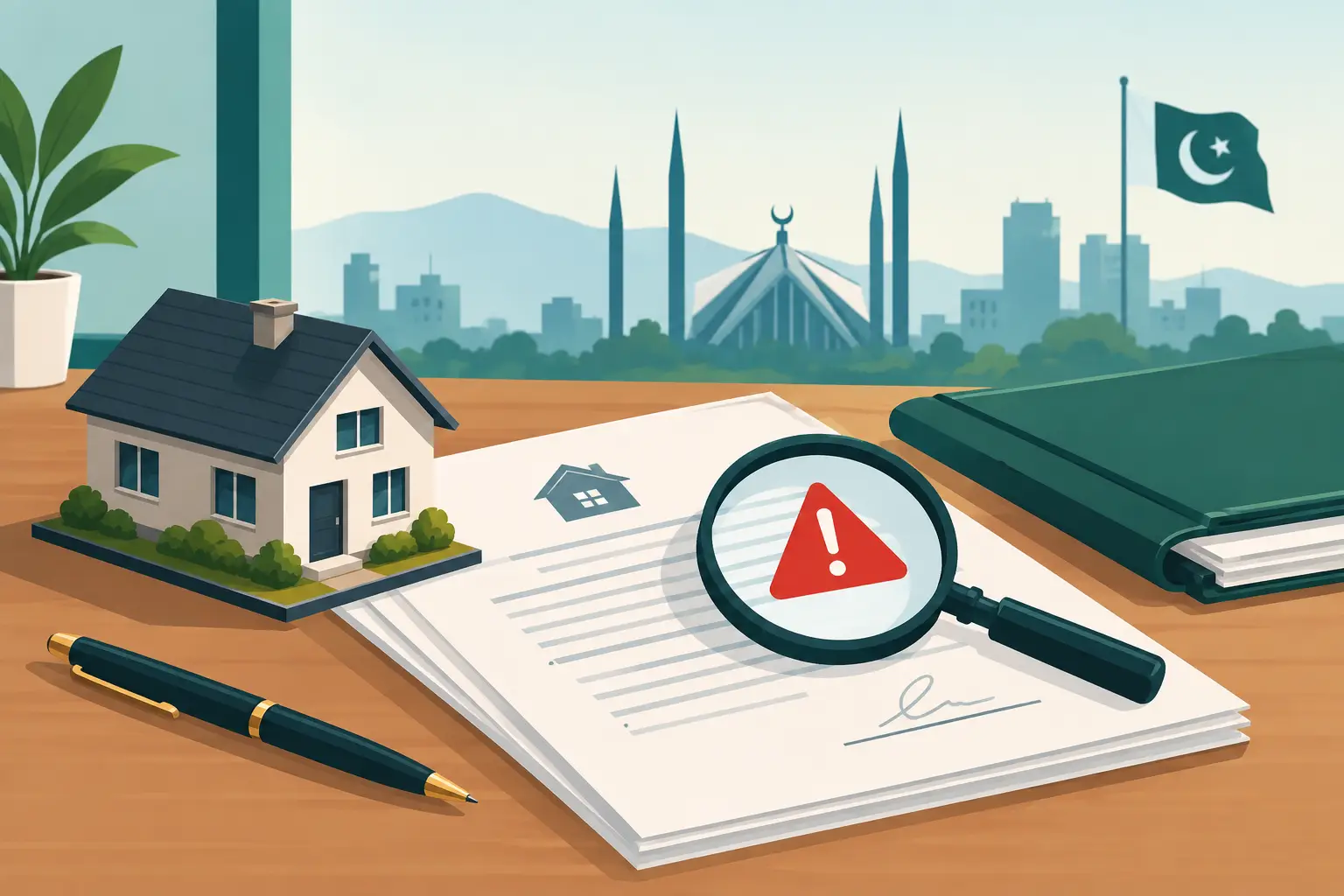
Spot the top red flags in property paperwork before a purchase, inheritance transfer or dispute in Pakistan puts your family asset at risk from abroad.
A property file can look complete from a WhatsApp photo and still conceal the one document that matters most. For UK-based Pakistanis, the top red flags in property paperwork are rarely obvious spelling mistakes. They are gaps between what the papers appear to say, what the land record shows, and what is happening on the ground.
That gap is where families lose time, money and control. A seller may present an old registry while the mutation was never completed. An heir may hold a death certificate and family agreement but have no legal transfer in the relevant record. A plot may have an allotment letter, yet remain subject to unpaid dues, cancellation risk or a disputed possession status.
Paperwork should not be treated as a formality to tick off before sending funds. It is evidence that must be checked in context, independently and, where necessary, against the physical position of the property.
Top red flags in property paperwork to check first
Names that do not match across documents
A mismatch in names is one of the most common warning signs, particularly where property has passed through parents, grandparents or several family members. A minor variation in spelling does not always mean fraud. Pakistani records may use initials, different English spellings or names written differently in Urdu and English.
The concern begins when the discrepancy is unexplained. The name on the sale deed, registry, mutation record, identity document, tax record or housing society file should lead back to the same person. If it does not, ask for a clear documentary chain showing why. Marriage, inheritance, correction of record or a previous transfer may explain it. Verbal reassurance does not.
The same applies to the property description. Plot number, khasra number, khewat number, survey number, area and boundaries must be consistent with the type of property and the local record. A document for Plot 22 in one block is not protection if the seller is showing you possession of Plot 22 in another block.
A registry without a clear ownership trail
People often hear that a registry is the final proof of ownership. In practice, it is a key document, but it is not the whole investigation. The document may be genuine while the seller's right to sell is incomplete, challenged or no longer current.
For land and many houses, the ownership trail may involve a registered sale deed and the relevant revenue record, including mutation or intiqal. In a housing society, it may involve an allotment letter, transfer letter, membership record, possession letter and confirmation from the society. The exact paperwork depends on the location and tenure, which is why a single-document check is risky.
Be especially cautious where someone says, “The registry is in the previous owner’s name, but the transfer is understood.” Property is not protected by understanding. If the chain of transfer is broken, your position may be weaker than the price you are being asked to pay suggests.
Missing mutation, transfer or society approval
A mutation is not a substitute for every other ownership document, but its absence can be a serious concern where it should have been recorded. It may indicate that a sale, gift or inheritance was never reflected in the official revenue record. This can create difficulty when selling later, seeking possession or responding to a competing claim.
For society-based plots and homes, equivalent problems arise when the seller has not completed the society transfer, has no valid membership status, or cannot obtain the required no-objection certificate. An old allotment letter may show an initial allocation, not an unrestricted right to sell today.
There are legitimate reasons for delays. Some records are slow to update; some older schemes operate under unusual procedures. The question is not whether every file looks identical. The question is whether the responsible authority recognises the current owner and permits the proposed transaction.
Power of attorney used as a shortcut
A power of attorney can be valid and useful, particularly for overseas owners. It can also be misused. Treat it as a document requiring its own verification, not as a shortcut around checking the owner.
Confirm who granted it, when it was granted, what powers it gives, whether it was properly executed and whether it remains in force. A power of attorney may be limited to managing property rather than selling it. It may refer to a different property, have been revoked, or have become ineffective due to the death of the person who issued it.
If a representative is pressing for urgent payment because the owner is abroad, unavailable or unwilling to speak, slow the process down. A genuine transaction can withstand independent questions. Pressure is not proof.
Inheritance papers that stop short of ownership transfer
Inherited property causes some of the most painful disputes because families confuse entitlement with completed title. A death certificate, family tree, succession certificate, letter of administration or family settlement may be relevant, but none should be viewed in isolation.
The correct route depends on the asset, the province, the personal law position and whether there is disagreement among heirs. Where a property remains in a deceased person’s name, an heir may have a genuine share but still lack the practical authority to sell the whole property. A sibling offering to “sort out everyone later” is not a safe arrangement.
Watch for missing heirs, unsigned consent, women heirs being excluded, or informal waivers that have not been properly documented. These issues may not prevent a transaction immediately, but they can return years later when another family member challenges it.
Documents that describe land but not possession
A clean-looking file does not tell you who is actually in control of a property. This matters acutely for vacant plots, agricultural land, inherited homes and premises left unattended while the owner lives in the UK.
The papers may identify a plot, but an on-ground inspection can reveal an occupied boundary, altered access route, construction by a neighbour, tenant in place or qabza claim. In some cases, the property shown to a buyer is not the land identified in the documents at all.
Document checks and site checks answer different questions. One examines title and record. The other examines possession, boundaries and local reality. You need both before buying, selling or attempting recovery.
Unpaid dues, restrictions and hidden liabilities
A property can be transferable in principle yet financially or administratively blocked. Housing societies may require clearance of development charges, transfer fees, utility arrears or penalties. Land may be subject to acquisition notices, court proceedings, mortgages, charges, tenancy claims or restrictions on transfer.
Ask for current, authority-issued confirmation rather than relying on a receipt from years ago. A seller’s statement that “all dues are clear” has little value unless the relevant authority confirms it. If the price is unusually low, unpaid obligations or a transfer obstacle may be part of the reason.
When paperwork looks too perfect
Some fraudulent files are not untidy. They are carefully assembled. Stamps, photocopies, affidavits and official-looking letters can create confidence while avoiding the records that would expose the problem.
Be wary of documents that are only supplied as scans, especially if originals are repeatedly unavailable. Be wary when you are discouraged from contacting the housing society, land record office or other authority directly. Be wary when every answer comes through the same agent, relative or seller-side representative.
Independence matters because the person arranging the sale may earn a commission only if you proceed. Their interest is not necessarily aligned with yours. A client-side review should be prepared to identify a problem, delay the transaction or advise against it where the evidence does not support a safe path forward.
What to do before you commit funds
Start by gathering the complete file, not selected photographs. Establish the ownership chain, verify the seller or representative, and identify which authority controls the record. Then compare the papers with current official information and the physical condition of the site.
Do not treat token money as harmless. Once funds have been sent, it becomes harder to negotiate from a position of strength. If a deposit is necessary, the terms should be clear about what must be verified, who holds the money, what happens if the title fails checks, and the timetable for completion.
For inherited, occupied or disputed property, expect the work to take longer. Speed can be valuable when a genuine opportunity exists, but rushed paperwork is often a transfer of risk from the seller to the buyer.
NRP Properties works from the client side, not the sales side, to investigate paperwork, coordinate on-ground checks and represent overseas owners in Pakistan. The purpose is simple: make decisions based on verified facts rather than pressure, family assurances or a polished file.
A property document should give you confidence because it has been tested, not because it has a stamp, a signature or a familiar name on it.
Need advice on your own situation?
Every property situation is different. Tell us what you are dealing with and we will tell you where you actually stand before you spend anything.
Request a free assessment